
A
Understanding Stability and Change
Child recognizes and develops the ability to explain how material objects change and how they remain stable.
0–9 months – See this age across all domains Infants
What educators might observe
- When something is dropped and make a sound, looks towards that sound
- Looks for educator after they step out of the room
- Looks for or orients toward a pacifier that they have just dropped
- Finds a rattle that is hidden under a blanket when only part of the handle is showing
Ways educators might support the child's development
- Play peek-a-boo with the child
- Partially cover a familiar object with a cloth or blanket and ask, ”Where Is It,” showing excitement when the child uncovers the toy
- Carry the child to look for familiar people, toys or pets, asking, “Where Is…”
8–16 months – See this age across all domains Infants
What educators might observe
- Tests the stability of physical objects, for example, patting, banging, reaching inside, and sitting on an empty box
- Looks for a toy that has been hidden under a blanket
Ways educators might support the child's development
- Read books like Where’s Spot? and encourage the baby to lift the flaps; share in the baby’s excitement
- Sing “Where is Thumbkin?” while slowly revealing your hands and fingers and then folding them away
15–24 months – See this age across all domains Toddlers
What educators might observe
- Uses a variety of strategies to find missing people or objects, including looking in multiple locations for things that have been missing for some time
- Waits or watches at window for the return of a family member
- Thinks that they may go down the toilet or bathtub drain
Ways educators might support the child's development
- Play with a Jack-in-the-Box alongside the child (Note: sometimes children do not readily accept this toy.)
- Give the child a box large enough for them to climb in and out of so that they can be “Jack.”
- Play a simplified version of hide-and-seek using sounds to help the baby find you; repeat the game by having the baby hide
24–36 months – See this age across all domains Toddlers
What educators might observe
- Is curious about physical objects that appear to be stable but whose properties change, such as ice and sand
- Reacts to puppets and adults in costume as if they were real
Ways educators might support the child's development
- Set up activities such as mixing color stations or watercolors over ice cubes to show how things change properties
- Plant bean or grass seeds and watch them grow
- Notice and respect children’s feelings about puppets and costumes
3-year-olds – See this age across all domains Preschool
What educators might observe
- Hides own eyes but leaves parts of their body exposed while playing hide-andseek
- Uses phrases to initiate and identify make-believe play with others (“Let’s pretend…” or “I was just pretending!”)
- Asks about the permanency of their gender and racial identity (e.g., “Will I always be a boy/girl? Will I always have my skin color?)
- Offers magical explanations for change (e.g., says that a fairy puts the moon in the sky every night)
- Uses language about death, without necessarily thinking it is a permanent state
Ways educators might support the child's development
- Ask follow-up questions to children’s magical explanations of how things change (e.g., ”Tell me more about that.” “What makes you think that?”)
- Encourage child to draw or paint a picture to express their thoughts or feelings about change
- Gently clarify when children suggest that a dead person or animal will come alive again; use simple language
4-year-olds – See this age across all domains Preschool
What educators might observe
- Plays hide-and-seek, fully hiding body, but laughing or otherwise staying in touch with playmates through sound
- Plays with their shadow, trying to step on it or get away from it
- Has difficulty imagining that their adult family members were once children
- Investigates the permanence of death through observation of insects and animals and in dramatic play; will ask questions about where the insect or animal may go
Ways educators might support the child's development
-
Provide concrete examples of changes that occur
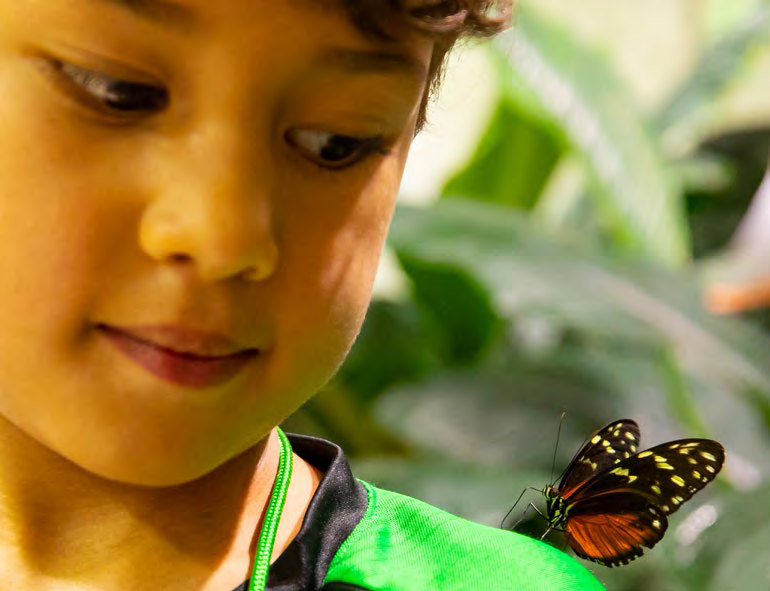
- Document the growth of a caterpillar into a butterfly
- Collect different colored leaves (green, red, and brown)
- Watch a pumpkin decompose
- Trace their shadows at different times of the day
- Observe patterns of change in weather conditions, daily and seasonally
- Allow the children to have a ceremony when a classroom pet has died; answer their questions about death factually
5-year-olds – See this age across all domains Preschool
What educators might observe
- Begins to understand death as a biological event
- Begins to understand how the body functions to sustain life
Ways educators might support the child's development
- Include non-fiction books about life cycles in the learning environment
- Include simple biological information in discussion of death (“Their heart has stopped beating. They are not coming back.”)
6-year-olds – See this age across all domains Early elementary
What educators might observe
- May be anxious about death
- Discusses the physical changes that accompany age
- Can imagine their adult family members growing old
- Compares the life cycles of different organisms (e.g., says that people live longer than dogs)
- Becomes conscious of time, but is not yet able to tell time on the clock (“Is it three o’clock? My grandma is coming to get me.”)
Ways educators might support the child's development
-
Include books in the learning environment that help children understand death
- And So It Goes , by Paloma Valdivia
- Goodbye Mog , by Judith Kerr
- The Goodbye Book , by Todd Parr
- Ida Always , by Caron Levis and Charles Santoso;
- The Dead Bird , by Margaret Wise Brown
- Read non-fiction books about the life cycles of familiar animals (such as cats, dogs, and other animals that children see in their communities); explore rituals and routines for having pets and for pet deaths
7-year-olds – See this age across all domains Early elementary
What educators might observe
- Discusses what happens to the body after death
- Understands the patterns of the days of the week and the months of the year
- Asks questions about the properties of materials (e.g.,”What is the air made out of?”)
Ways educators might support the child's development
- Talk to family members about their beliefs about death and how they would like to explain death to the child
- Talk to children about the inevitability of the life cycle, and how it applies to everything that is alive
- Observe food as it turns to compost; discuss how it changes
8-year-olds – See this age across all domains Early elementary
What educators might observe
- Start to understand how ecosystems can change quickly (a storm) or slowly (a pond becoming a meadow)
- Combines and separates mixtures in sophisticated ways (e.g., uses a series of strainers to separate out the pebbles and silt in river water)
Ways educators might support the child's development
-
Create opportunities for children to explore stability and change in local contexts
- Visit a local watershed to study water quality
- Look at photos of the local area in years past in comparison to today
- Ask about characters in chapter books (“How do they change over the course of the story? Why do they change? What is the same about them throughout?”)