
Physical Well-Being, Health and Motor Development
B
Small Motor Skills
Child controls the small muscles in their hands and wrists.
0–9 months – See this age across all domains Infants
What educators might observe
- Discovers fingers and toes
- Holds feet in hands or put hands in mouth
- Opens and closes hands
- Grips caregiver’s finger or similar object
- Coordinates hands and eyes when reaching for and holding a toy, such as a rattle
- Reaches out and pushes ball
- Picks up an object, such as a rattle , turns it over, and drops it
- Grasps objects in each hand and bangs them together
Ways educators might support the child's development
- Speak gently to the baby grasping your finger in a fist
- Gently touch the baby’s hands so that they can become aware of them
- When child is able to sit upright in a chair or high chair offer them soft finger foods that they can feel and pick up, such as cereal rings and very soft vegetables
8–16 months – See this age across all domains Infants
What educators might observe
- Uses forefinger and thumb to pick up smaller objects like cereal or pasta
- Picks up small blocks and drops them into a container
- Practices placing objects on top of one another, such as blocks or stacking cups
- Grasps the string of a pulltoy
- Makes holes with one finger in play dough
- Points, with index finger extended and other fingers in a fist
Ways educators might support the child's development
-
Include materials in the learning environment that foster fine motor skills
- Nesting toys
- Linking rings
- Busy boxes
- Cloth books
- Squishy balls
- Observe and reflect to the child what their hands are doing
- Provide objects of different textures for the child to hold or bang; describe what the child is doing (“You are holding that spoon so tightly. You opened your fingers and let it go.”)
- Support the child’s sense of dignity and autonomy by allowing them to choose what to do with their hands; avoid manipulating the child’s hands for them
15–24 months – See this age across all domains Toddlers
What educators might observe
- Holds a truck in one hand and uses the other hand to explore the wheels
- Pulls toys by tugging on a string
- Holds on to two blocks while trying to reach for another block
- Uses large brush to stand and paint at the easel
- Holds board book upright and turns the pages
- Holds a crayon between fingers and thumb and scribbles with big arm movements
- Uses wrist to rotate knob puzzle pieces to fit them in puzzle board
Ways educators might support the child's development
- Acknowledge the child’s efforts at mastery of their fine motor skills and share authentic praise of their accomplishments
- Sings songs in which the child can observe your hand movements, such as “The Itsy Bitsy Spider” and “Little Fish, Little Fish, Swimming through the Water”
24–36 months – See this age across all domains Toddlers
What educators might observe
- Use child-safe scissors in one hand to make snips in a piece of paper
- Strings large wooden beads onto a shoelace
- Balances 5–6 blocks on top of one another
- Open a door by turning the round handle
- Picks up a cup with one hand to drink from it
- Turns the pages of a paper book one at a time
Ways educators might support the child's development
-
Include materials in the learning environment that foster fine motor skills
- Balls
- Blocks
- Cardboard tubes to string with yarn
- Knob puzzles
- Large pegboards
- Modeling compound
- Spoons and scoops in sand and water areas
- Cloth to collage
- Safety scissors
- Paper to crumple/rip
- Variety of painting supplies
3-year-olds – See this age across all domains Preschool
What educators might observe
- Uses crayon, marker, or pencil to draw lines and rough circles and shapes that may resemble letters and people
- Turns the pages of a book one at a time
- Builds a tower of 8 or more small blocks
- Cuts across small piece of paper with scissors
- Pinches, pounds, rolls, and squeezes clay
- Can place and remove a cookie cutter from a mound of clay
- Places small pegs in in pegboard
- Pours water from a small pitcher into a cup with minimal spillage
- Can use forks, spoons, or chopsticks
Ways educators might support the child's development
-
Include materials in the learning environment that foster fine motor skills
- Safety Scissors
- Magazines to tear and cut
- Clay and play dough
- Small blocks
- Duplos
- Fingerpaint
- Easel painting
- Pegboards
- Puzzles
- Small cups and containers in the sand and water areas
- Chunky crayons
- Stickers
- Large wooden beads for stringing
4-year-olds – See this age across all domains Preschool
What educators might observe
- Strings small beads onto laces
- Builds a tower of 10 or more blocks
- Hits nails and pegs with a hammer
- Forms shapes and designs out of clay (such as cookies with chips or snakes with eyes)
- Buttons medium-large buttons when dressing themselves
- Cuts along a line
- Pulls tape off a dispenser, then attempts to tape items to a page or form tape into a ball
Ways educators might support the child's development
-
Include materials in the learning environment that provide a variety of opportunities for practicing writing and drawing
- Markers
- Colored pencils
- Dry erase boards
- Slates with chalk
- Bingo markers
- Oil pastels
- Magnetic writing boards
- Playground chalk
- Watercolor painting supplies
- Practice writing letters in materials that provide sensory input, such as trays of shaving cream or sand
5-year-olds – See this age across all domains Preschool
What educators might observe
- Consistently uses their right or left hand
- Tears a small piece of tape off a tape dispenser
- Uses scissors with one hand to cut out shapes
- Uses pencil to copy many shapes and letters; these may be overly large or rough looking but the letter will be apparent
- Spins a top
- Zips up own coat
Ways educators might support the child's development
-
Include materials in the learning environment that foster fine motor skills
- Geoboards
- Legos
- Bottles of glue
- Tape
- Wire
- Plasticine
- Small beads for stringing
- T ops
- Show sensitivity to children’s flexible directionality, and demonstrate left to right directionality with writing and counting, as on a number line
6-year-olds – See this age across all domains Early elementary
What educators might observe
- Cuts out a shape, such as a house, with scissors
- Uses a pencil to write letters
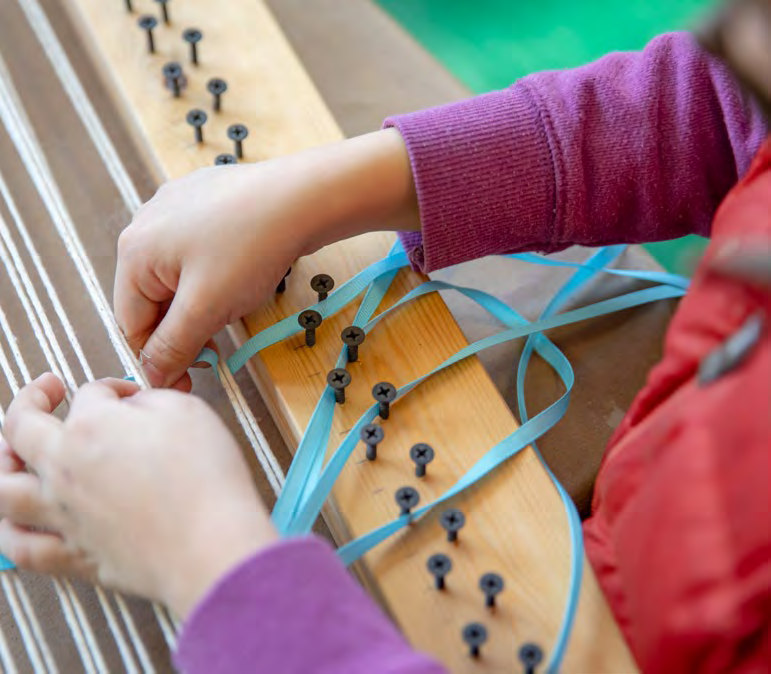
- Makes braided chains of yarn or finger-knits
- Uses a large needle and thread to sew a pouch or a pattern
- Weaves yarn or strips of paper together
- Grips and squeezes a paper punch or pliers
- Ties shoelaces in bow
Ways educators might support the child's development
-
Include materials in the learning environment that foster fine motor skills
- Legos
- Geoboards
- Clay
- Yarn
- Sewing materials
- Hand looms
- Scissors
- Hole punches
- Hammer and nails
- Drill
- Pliers
7-year-olds – See this age across all domains Early elementary
What educators might observe
- Uses saws and hammers to build a construction
- Peels carrots and potatoes efficiently with a peeler
- Writes using letters that are the same size; stays on line when writing
- Knits a scarf
- Uses appropriate pressure when writing
Ways educators might support the child's development
-
Provide opportunities for children to use their fine motor skills for meaningful work such as
- Using a knife to spread cream cheese or nut butter on crackers or celery
- Cutting and coring apples with an apple corer
- Peeling carrots and potatoes for soup
- Tying shoelaces
- Using a screwdriver to fix a desk
- Knitting a scarf
- Making their own books and comics
8-year-olds – See this age across all domains Early elementary
What educators might observe
- Folds paper into simple origami shapes
- Cuts out complex shapes
- Print has a consistent shape and size
- Learns cursive
Ways educators might support the child's development
- Invite a calligrapher to visit the class to demonstrate the beauty of writing
- Encourage children to pay attention to handwriting in the final revision of their writing projects
- Continue to provide time for activities designed to strengthen the muscles in children’s hands
- Provide keyboards for children whose fine motor skills interfere with their ability to express themselves in writing