
C
Persistence and Attentiveness
Child focuses on tasks and perseveres in accomplishing them.
0–9 months – See this age across all domains Infants
What educators might observe
- Repeatedly shakes rattle to produce noise
- Holds the attention of their caregiver (e.g., smiles, babbles, sustains eye-contact, cries)
Ways educators might support the child's development
- Respond to the child’s need for rest and nourishment as a precursor to the child being attentive and persistent
- Create time in the day in which the educator sits on the floor with the child as they freely engage with materials of interests
- Enthusiastically mirror a child’s delight and joy
- Be present for the child; hold them for extended periods while singing, humming, and sharing spontaneous stories aloud
- Remove screens and electronic toys from the learning environment in order to foster deep and meaningful engagements
8–16 months – See this age across all domains Infants
What educators might observe
- Is deeply focused on mastering a new skill for days at a time (e.g., works to get onto all fours and then rocks when learning to crawl)
- Focuses on the same thing as the caregiver (e.g., watches the caregiver’s hands and looks at their face as they turn the pages of a book)
- Puts blocks in a bucket and then dumps them out and does it again
Ways educators might support the child's development
-
Create learning environments and schedules that promote the development of focus and attention
- Regular uninterrupted time for free play
- Enough space for movement
- Limited number of materials
- Limited environmental distractions and intentional use of recorded music (e.g., during nap time, but not as background music during free play)
- Minimize visual distractions with walls that are simple, neutral in color, and free of commercial materials. Note: In order to supervise children and be present with them, educators should refrain from accessing their personal phones in the learning environment. Photographs and videos of children should be taken with a dedicated device.
15–24 months – See this age across all domains Toddlers
What educators might observe
- Tries many ways of getting to an object that is out of reach
- Wants to do favorite activities and practice developing skills over and over again (e.g., repeatedly jumps off low step)
- Continues to try a difficult task when a caregiver sits close to them
Ways educators might support the child's development
- Ensure that the child’s caregiving needs are met so that they can focus on the task at hand
- Join the child in paying attention to an object or experience of interest
- Talk with the child about their activities using open-ended questions, such as “How did you do that? Tell me more.”
- Notice the child’s verbal and non-verbal expressions of determination, such as “Me do.” Provide time for the child to attempt the task independently and acknowledge their effort
24–36 months – See this age across all domains Toddlers
What educators might observe
- Sits on a caregiver’s lap while they read a board book from start to finish
-
Maintains their focus on a desired outcome
- Stacks large cardboard blocks until they balance
- Completes 3–5 piece puzzle
- Pushes and pulls a wagon up a hill
Ways educators might support the child's development
-
Provide materials and opportunities that meet their growing skill level. For example:
- Scissors that cut well and are designed for leftor right-handed dominance
- Small pitchers and stable cups so that children may pour independently
- Easy to manage clothing such as pull-on pants
- Sinks and toilets at child level or safely adapted for independence
3-year-olds – See this age across all domains Preschool
What educators might observe
- Focuses on the character and plot when engaged in pretend play (e.g., pretends to be the mother and stays in this role as the doll babies are fed and put to bed)
- Listens to a short story from start to finish with a small group of children
- Tries several times to put on their own shoes before asking for help
- Chooses the same puzzle every day until they can do it with ease
Ways educators might support the child's development
- Follow the child’s lead in play; this may mean that the child assigns a role to the educator, often with the educator being a child, and the child assuming an adult role
- Though materials in the learning environment should be rotated, allow for previously used materials to reappear at the child’s request, and keep materials that the children are actively engaged with available to them
- Allow for ample time for the child to practice tasks such as dressing themselves and to develop self-help skills
4-year-olds – See this age across all domains Preschool
What educators might observe
- Makes a bead necklace of their name and sorts through all the letters until they find those needed
- Puts blocks away in their designated places until every block has been put away
- Listens to a storybook read to the whole group from start to finish
- Asks for help from a caregiver to complete a task
Ways educators might support the child's development
- Offer the child genuine opportunities to care for the learning environment, indicating how important and meaningful it is to be mindful of such tasks as watering plants, putting materials away, or stacking objects
- Notice children’s accomplishments, patience, and persistence and describe why their efforts are important
- Provide opportunities for children to revisit experiences and materials again and again so they are able to deepen their understanding
-
Encourage the child in their work, rather than solving the problem for them. Ask:
- “How can you figure that out?”
- “How can you fix that?”
5-year-olds – See this age across all domains Preschool
What educators might observe
- Attends to open-ended tasks that they are interested in for a minimum of 20- 30 minutes
- Pauses work to get up to talk to their peers
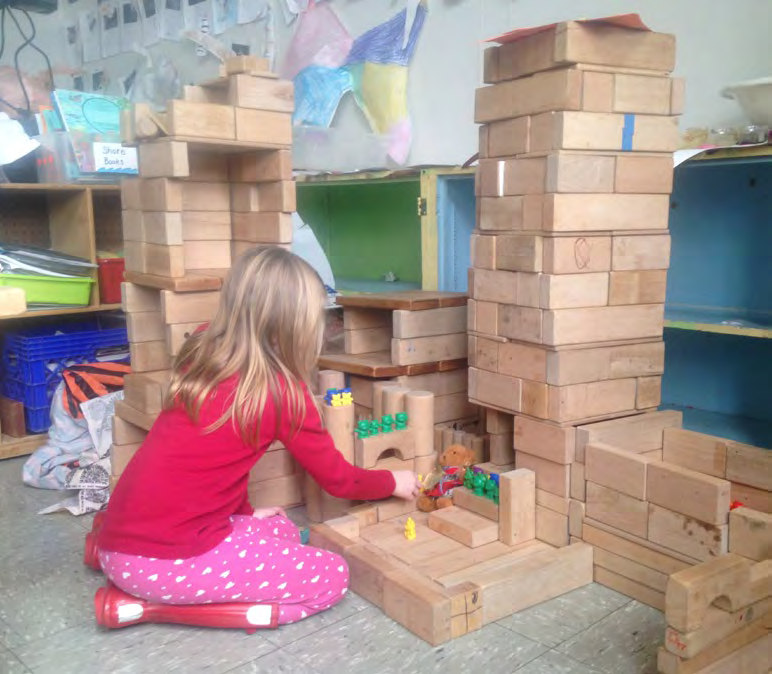
- Rebuilds their elaborate block structure after it has been knocked down
- Tries several different ways of solving a problem (e.g., tries making a bridge with blocks to drive a car over, and when it falls, tries a new foundation so that it will support the cars)
Ways educators might support the child's development
- Choose a book to read aloud to the class over several days; each day ask children to recall details from the previous readings and predict what will happen next
- Offer children a variety of materials for open-ended work, encouraging them to stay with work they do not finish in one working period
-
Take time to reflect on the process together, asking:
- “How did you do that?”
- “Where did your idea come from?”
6-year-olds – See this age across all domains Early elementary
What educators might observe
- Sustains interest in a chapter book the educator is reading the class over the course of several weeks
- Reflects on their work and makes changes based on feedback from peers or educators
Ways educators might support the child's development
- Provide large, uninterrupted time blocks for work on projects
- Ask children to share work in progress, reflect on their process, and plan aloud their next steps; other children can offer suggestions for next steps
- Create areas in the classroom for “works in progress”
7-year-olds – See this age across all domains Early elementary
What educators might observe
- Is able to concentrate for extended periods of time (30 minutes or more), even on non-preferred tasks
- Makes several attempts to solve a problem, but doesn’t give up until they find a solution
- Tries multiple strategies for solving a problem
- Remembers essential facts over a period of days
- Is conscious of the presentation of their work and makes revisions to improve their work
Ways educators might support the child's development
- Encourage children to choose and read books that they need several days to finish; when you check in with them ask them to summarize and predict
- Support children in planning and carrying out projects over time; offer structures for them to keep track of steps in their work (i.e., check lists, story maps, and planning pages)
-
Create formats for reflective talking and writing about the child’s work processes, including such prompts as
- “What was hard in making your project?”
- “Where did you get stuck?”
- “How were you able to figure out the problem?”
8-year-olds – See this age across all domains Early elementary
What educators might observe
- Screens out distractions and concentrates on relevant information as they work
- Makes a decision about how to work so they will be able to focus
- Decides to step away from a challenge when frustrated and then returns to it
- Organizes long-term projects (e.g., begins a project by gathering supporting texts)
- Revises their writing, checking for meaning, spelling, and punctuation
Ways educators might support the child's development
- Notice and provide encouragement when children feel frustrated or impatient (e.g., “I see that this is taking longer than you expected, and sometimes when we have to take many steps to solve a problem, we get tired!”)
- Acknowledge persistence (e.g., “Wow, you are wrestling with that long text! I bet you are learning so much. I can’t wait to hear your thoughts about it.”)
- View mistakes as learning opportunities (e.g., “I love seeing your work on this problem; every time I see you find a mistake and use a new strategy, I know your brain is growing!”)
- Reach out to families to help with establishing a routine for homework time and modeling positive support