
Physical Well-Being, Health and Motor Development
C
Sensory Integration
The child uses sight, hearing, smell, taste, touch, proprioception (deep pressure), and vestibular function (balance) to perceive and respond to the world around them.
0–9 months – See this age across all domains Infants
What educators might observe
- Has a range of vision that is several feet by the age of four months
- Calms while being held as educator dances, sways, or rocks
- Tracks objects by moving both eyes together; makes eye contact with educator
- See objects at a distance by seven months
- Uses eyes, hands, feet, and mouth together to explore the environment (e.g., picks up an object, looks at it, then mouths it and looks at it again)
- Hears door closing and looks to see who is coming
- Falls asleep when moving (e.g., in sling, stroller, or car)
Ways educators might support the child's development
- Gently massage, rock, rub, and stroke the child to soothe and comfort
- Create simple, aesthetically pleasing environments in which the child’s senses are both stimulated and calmed
- Give words to the child’s experience of the sensory world (“Yes, I feel you. Do you feel my hand? You smell so good. I see your big eyes looking at me.”)
- Provide teething rings and items that can be chewed on and easily washed
8–16 months – See this age across all domains Infants
What educators might observe
- Nuzzles their face into a freshly washed blanket to smell it
- Moves their body to the rhythm of music
- When a new food is introduced, makes a face and might spit it out
- Feels objects in the environment (e.g., mashes and mixes the food on their high chair tray or, when walking, stops to pat a puddle)
- Jiggles (e.g., sits on an educator’s knee and bounces up and down or pulls themselves to stand and bounces on their own knees)
Ways educators might support the child's development
-
Create a learning environment that provides opportunities for children to develop their senses; consider Including
- Natural sunlight
- Time for singing with human, rather than recorded, voices
- Drums and rainsticks
- Toys made of natural materials, such as cloth and wood
- Items with different textures for children to feel
15–24 months – See this age across all domains Toddlers
What educators might observe
- Starts to move body to fit into different spaces (e.g., fits their body into boxes, shelves, or laundry baskets)
- Pats, pushes, mounds, and squeezes modeling compound
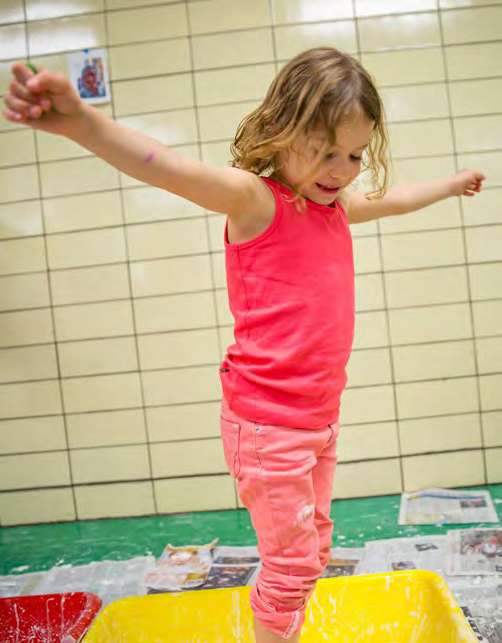
- Enjoys (or shows a dislike for) messy activities
Ways educators might support the child's development
- As educators cook, they may offer the child cornstarch or flour to feel
- Talk about smells with children, such as the aroma of cooking or the scent of natural items such as flowers and grass
- Provide time for children to spend in nature
- Invite children to participate in meaningful jobs that require lifting, pushing, pulling, and carrying objects of various sizes and weights
24–36 months – See this age across all domains Toddlers
What educators might observe
- Notices textures on their clothes (e.g., a lumpy sock or pants made of different fabric than their shirt)
- Tries different positions for walking quickly or running (e.g., leaning forward, rotating arms like propellers, or running sideways)
- Jumps off a step
- Rolls across the floor
- Touches everything in their environment
Ways educators might support the child's development
-
Create a learning environment that provides opportunities for children to develop their senses; consider Including:
- Beautiful objects
- Heavy objects for children to move and carry, such as phone books wrapped in duct tape or laundry detergent containers filled with sand
- Large pieces of cloth in which children can wrap themselves
- Opportunities for practicing balance, such as riding a rocking horse
- Water and sand tables
- Materials that can be stretched, squeezed, and rubbed
3-year-olds – See this age across all domains Preschool
What educators might observe
- Navigates learning environment, occasionally bumping into tables and chairs
- Perceives the difference between similar colors (e.g., red and orange)
- Turns around and around until dizzy
- Expresses preferences about the way things feel (e.g., whether the temperature of the air is too hot or too cold)
Ways educators might support the child's development
- Invite children to explore different textured materials, such as velvet, felt, satin, cotton, dry leaves, seeds, dirt, and flowers
- Create simple cooking experiences with the children that involve smelling the ingredients, pouring, mixing, and stirring
- Add scents such as lavender or apple pie spice to homemade play dough, checking for allergies beforehand
- Provide opportunities for children to use sensory tables, including light tables and water/sand tables on a daily basis
- Provide a quiet space with soft furnishings that may also include a listening center, soft animals, objects to squeeze, or picture books
4-year-olds – See this age across all domains Preschool
What educators might observe
- Not able to see close up as well as they can far away
- Jumps off platforms
- Experiments with different kinds of slides and ways to slide
- Roughhouses with peers
- Swings and holds balance without falling off
Ways educators might support the child's development
- Engage families in conversation about their values around rough-and-tumble play
- Identify and evaluate which local playgrounds have equipment for climbing, swinging, and balancing that meets safety guidelines
-
Provide access to experiences that develop the child’s sense of balance
- Balance boards
- Low balance beams
- Tire swings
- Bucket swings
- Slides
- Climbers
- Take the children on listening walks and then talk about what you heard
5-year-olds – See this age across all domains Preschool
What educators might observe
- Developing left-to-right visual tracking
- Moves around the learning environment easily and successfully
- Spends time moving their body into different positions (e.g., upside down)
Ways educators might support the child's development
- Have meetings before rough-and-tumble play to establish safe limits
-
Provide activities that engage children’s senses
- Rolling down a hill
- Wheelbarrow walks
- Monkey bars
- Rolling and carrying gallon jugs full of water
- Cartwheels
- Jumping jacks
- Include soft and cozy elements in the learning environment
6-year-olds – See this age across all domains Early elementary
What educators might observe
- Eye muscles are adequately developed to allow them to move their eyes efficiently across a series of letters
- Identifies and describes sensations they find soothing or disagreeable
- Propels self on swing by pushing off tree or other surface with their feet, and begins to pump their legs
Ways educators might support the child's development
- Support children in developing self-awareness about their sensory preferences
- Honor children’s requests for quieter environments, movement breaks, or alternative seating
- Reflect with colleagues on options available to children during recess, and add elements to the outdoor environment as necessary
7-year-olds – See this age across all domains Early elementary
What educators might observe
- Children’s senses are well-integrated
Ways educators might support the child's development
-
Provide activities that challenge children
- Bike riding
- Cooking
- Obstacle courses
- Hiking
8-year-olds – See this age across all domains Early elementary
The guidelines don’t define behaviours for this area at this age.