
Communication, Language, and Literacy
G
Creating and Interpreting Multimedia Texts
Child views, creates, and makes meaning of visual communication and multimedia documentation, which includes drawings, collections, photographs, videos and displays.
0–9 months – See this age across all domains Infants
What educators might observe
- Tracks people or objects by moving their head or eyes
Ways educators might support the child's development
- Limit cell phone and TV access to meaningful moments such as video-chatting with a grandparent
- As the child lifts their head or follows with their eyes in response to sounds and voices, name the individual or object in the environment
- Alter the child’s position in relationship to their interest
- Place pictures and mirrors low on the wall or by the side of changing table so that the child can gaze at them as diaper changing and play occurs
8–16 months – See this age across all domains Infants
What educators might observe
- Reacts differently to a video of themselves than to a video of another familiar person
- When talking to a family member on a video chat, crawls behind the laptop to see where the person is
- Tries to climb inside or take objects out of images (e.g., positions foot as if to climb inside a car depicted in a book)
Ways educators might support the child's development
- Ask families before creating visual images of their child; be mindful of cultural and religious prohibition about image-making
- Create family photo murals and post them at the child’s eye level in the learning environment
- Use video, audio, and photographs to document skills and experiences the child is interested in, such as rolling, crawling, swinging, and dancing
15–24 months – See this age across all domains Toddlers
What educators might observe
- Identifies themselves and familiar people in photographs
- Notices and identifies pictures, road signs, and graphics
Ways educators might support the child's development
- Take time to look at documentation of children’s development with children, families, and colleagues
- Document the development of a child’s interest or skill over time
- Look at the evidence of their curiosity and learning with them
24–36 months – See this age across all domains Toddlers
What educators might observe
- Makes connections between a display of objects or images of personal experiences
Ways educators might support the child's development
- Take photographs of local landmarks, familiar community members, or children’s houses; make a book of them or post them in the classroom
- Document experiences that were meaningful to the child, such as a time they jumped off a step, and use the documentation to reflect on the experience with the child
- Use photographs of the children in the classroom to create a picture schedule of the day
3-year-olds – See this age across all domains Preschool
What educators might observe
- Collects and shares objects with others (e.g., on a nature walk collects acorns and leaves to show educators and peers)
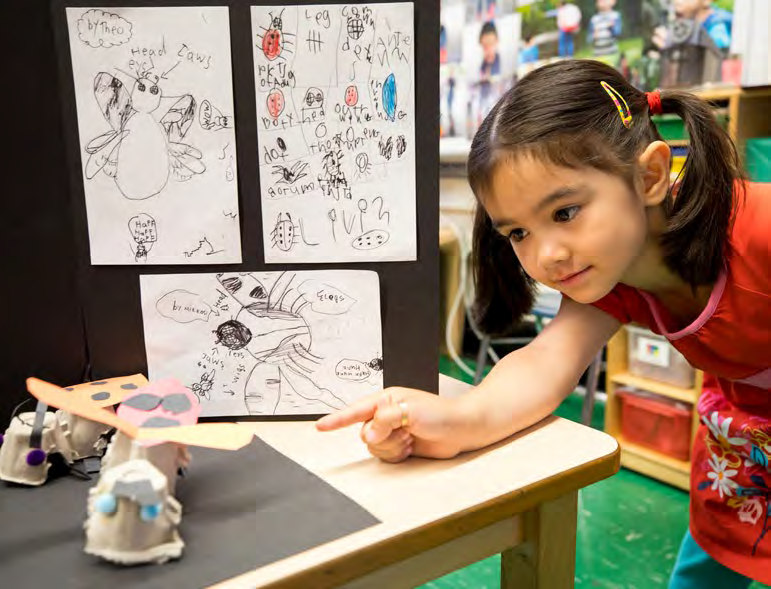
- Makes connections between documentation boards, drawings, and charts and past events (e.g., the child looks at a documentation board of the class trip to the fire station and says, “We saw the big hose.”
Ways educators might support the child's development
- Encourage families to share photos and videos documenting the child’s experience and development at home
- Provide child with time to view image or object and reflect on related experience
- Record children’s dictation as they look at documentation of experiences
- Ask follow-up questions around child’s creations and utterances, focusing on having the child tell you more detail and expanding the story
4-year-olds – See this age across all domains Preschool
What educators might observe
- Uses documentation of previous experiences in the learning environment to plan their play (e.g., looks at a photograph of a block building from the day before and tries to recreate the building)
Ways educators might support the child's development
- Include children in documenting learning; provide them with paper, pencils, journals, and cameras
- Provide opportunities for children to reflect on the documentation of their learning individually and in small and large groups
- Use documentation as the basis for storytelling and curriculum planning
5-year-olds – See this age across all domains Preschool
What educators might observe
- Plans to use multimedia documentation to record and extend their work in the learning environment
- Reflects on accuracy of visual documentation (e.g., looks at a picture of a dinosaur and says, “I think they were even bigger than that.”)
Ways educators might support the child's development
- Engage children in planning how to record experiences that are meaningful to them
- Support children in creating displays to share their learning with educators, families and peers
- Engage children in conversation about the accuracy of visual documentation
6-year-olds – See this age across all domains Early elementary
What educators might observe
- Views a slideshow of documentation from the learning environment and selects an image of an experience for further investigation
- Responds to the visual work of a peer using observations, comments, and questions
Ways educators might support the child's development
- Identify museums and galleries to visit with children
- Invite children to use drawing as a way to look closely at sculptures
- Invite a visual artist or filmmaker to visit the classroom
- Create a slideshow of documentation from the learning environment and share it with children each Friday
7-year-olds – See this age across all domains Early elementary
What educators might observe
- Uses vocabulary, such as “audience” and “represent,” to discuss the work of a filmmaker
- Discusses an artist’s decision to use memory, imagination, or observation in their creation
Ways educators might support the child's development
- Find out about free or low-cost opportunities to see art in the community, and share these opportunities with families
- Support children in making connections between popular culture and their own multimedia work in the classroom
- Look at a block building from different heights and talk about ways to represent with different points of view (worm’s eye view, bird’s eye view, or child’s eye view)
8-year-olds – See this age across all domains Early elementary
What educators might observe
- Identifies visual communication that is misleading
- Takes into consideration the aesthetic aspects of images, audio, and video related to their social and cultural meanings for an intended audience
Ways educators might support the child's development
- Invite a video editor to visit the class and ask them to explain the process of experimenting and editing with different tools to modify size, color, and shape for intended message
- Provide tools for children to make their own videos
- Support use of critical media literacy by provocations to discuss credibility and evidence
- Teach children to identify bias in media